What do employees dread more?
- Fracturing their legs while doing bhangra at the office party.
- Being friend-zoned by their office crush.
- Getting feedback from their boss.
The answer is obvious.
If there was a synonym for office terror, it would probably be “feedback”. I wonder why it is called FEED-back. Since when does feeding someone drain the energy out of them?
The real problem with feedback
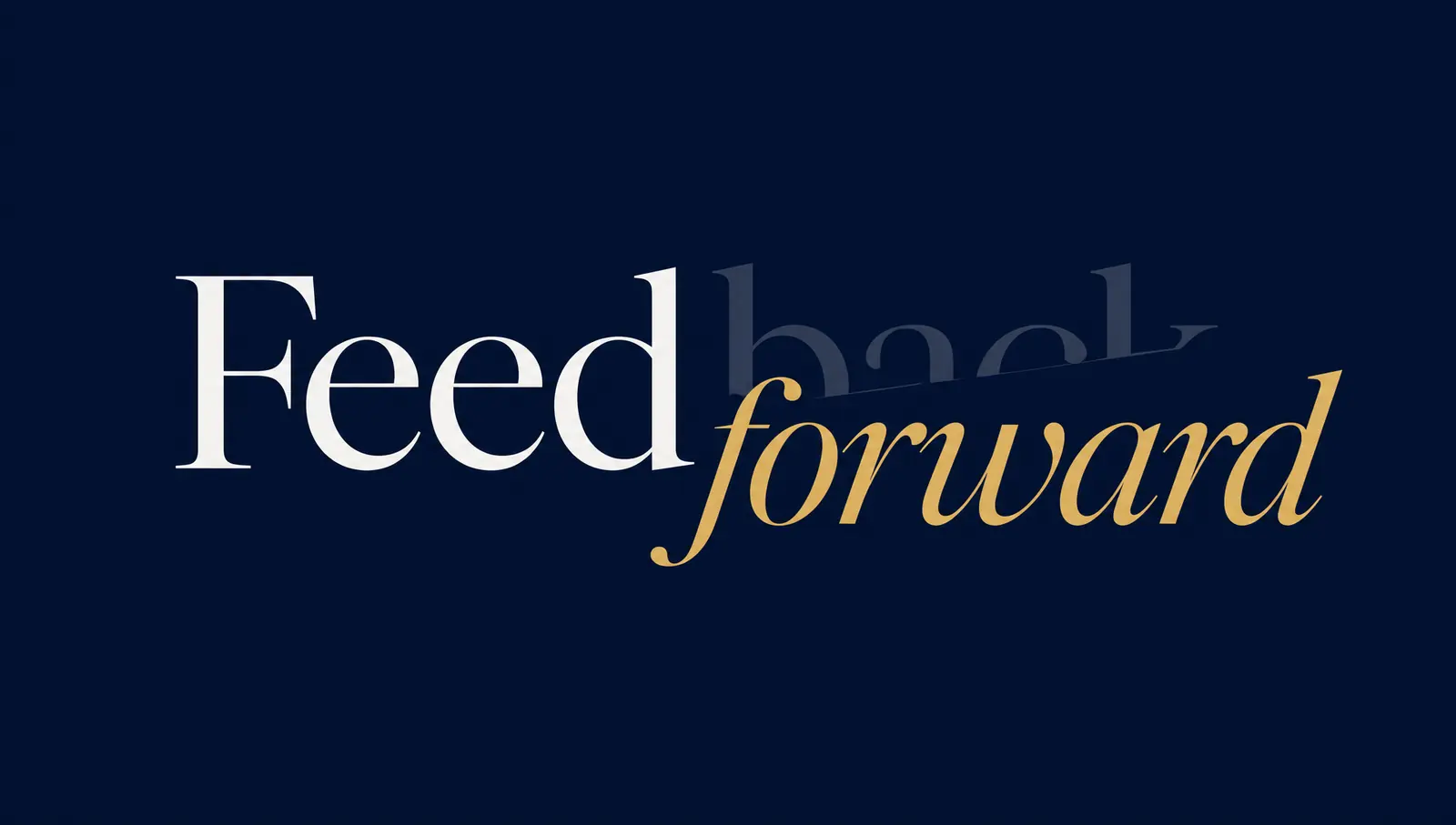
If the objective is to help someone improve, there is a much more interesting idea called feedforward, which I learnt from Marshall Goldsmith, one of the world’s best-known executive coaches.
Feedforward is about asking for specific suggestions on what you can do better in the future, rather than discussing what went wrong in the past.
Feedback is about the problem. Feedforward is about the solution. Feedback is about the past. Feedforward is about the future.
And perhaps most importantly, feedback is difficult to give and difficult to receive. Feedforward is much more fun. Nobody enjoys telling their boss, “Here are the five things you are doing badly.” But telling your boss, “Here are two things you could try next time” is a very different conversation.
When feedback still matters
That doesn't mean feedback is bad or that feedforward should replace it completely. As a boss, there are times when you absolutely need to give feedback. If someone is consistently missing targets, behaving badly or creating problems for the team, pretending everything is a feedforward exercise isn't going to help anyone.
But if your objective is development — feedforward can be a much more productive exercise.
Same problem, different conversation
Imagine your boss tells you, “Your presentation last week was terrible. You spoke too fast, your slides were boring and you completely lost the audience.”
Great. Now you know you gave a terrible presentation. Thank you for the trauma.
Instead, imagine your boss says, “For your next presentation, try slowing down and spending less time on your slides.”
Same problem. Completely different conversation.
How to use feedforward for your own development
Pick one specific behaviour you want to improve. Not “I want to become a better leader.” That is far too vague. Ask your boss, peers and team members something like: “I’m trying to get better at developing my team. Can you give me two specific suggestions I could try?”
Ask around ten people. And when they give you their suggestions, follow the hardest rule: just say “Thank you.”
Don’t defend yourself. Don’t explain the context. Don’t tell them why they are wrong. You asked for suggestions, not a courtroom hearing.
Collect the suggestions, look for patterns and choose the two or three that resonate with you.
Make the change public
Then do something even more interesting: make the change public. Tell your team what you are working on and ask them to point it out if you slip back. Come back to them a month later and ask how you are doing.
Now you have accountability, support and something else that matters enormously at work: visibility.
Because getting better is only half the game. People also need to see that you are getting better.
Feedback tells you where you went wrong. Feedforward tells you what to do better next time.
The one question to ask
The next time you want to improve, instead of asking, “What am I doing wrong?”, try asking, “What could I do better?”
Vishnu Saraf is the founder of BounceForward. IIM Ahmedabad alumnus and ex-McKinsey, he built a ₹150+ Cr business before turning to coaching Indian founders and leadership teams. More about Vishnu →
Lead better. Start now.
Talk to Vishnu →Get the next essay before your competitors do.
One email when a new essay goes live. No spam.
Unsubscribe whenever your ego recovers.