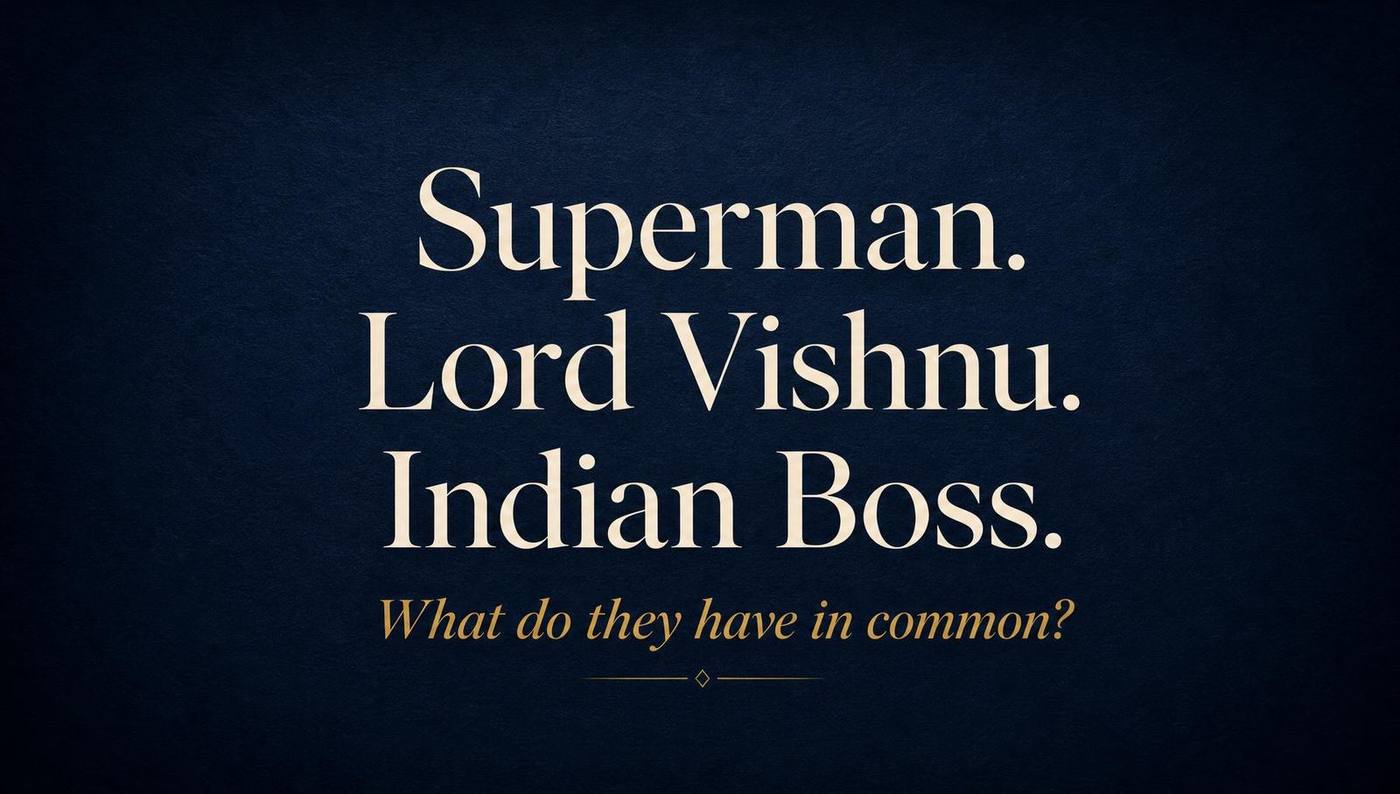
All three are expected to have the answers, solve problems and protect everyone else. Most importantly, they are not expected to be wrong.
That may sound exaggerated, but there is something interesting about the way we view authority in India. We give our leaders enormous respect and enormous power. But there is a less discussed consequence of this: the more powerful the leader becomes, the harder it can become for people around them to tell them the truth.
So, are Indian leaders fundamentally different from their global peers? And if they are, does that create a greater need for leadership coaching?
I believe it does.
From Seth to CEO
For a large part of India's business history, the boss was the seth or lala. He owned the business, made the decisions, decided salaries and promotions, and employees were expected to work hard, stay loyal and follow instructions. Questioning the boss wasn't exactly part of the job description.
India has changed dramatically since then. We have world-class companies, professional managers, MBAs, leadership programs and OKRs. But culture doesn't change as quickly as vocabulary. We may have replaced “Sethji” with “CEO”, but in many organisations the underlying relationship with authority hasn't changed nearly as much.
Geert Hofstede's cultural research offers some evidence for this. India has a Power Distance score of 77, significantly higher than the UK (35) and USA (40). In simple English, we are much more comfortable with hierarchy.
Or, as we repeatedly say, “Boss is always right.”
The problem with being the Indian boss
Indian bosses are superheroes. They make big decisions, small decisions and decisions that should probably have been made three levels below. After all, it's his company.
And because the boss is seen as the ultimate authority, people become extremely careful around him. They may disagree privately, complain over coffee and even have a WhatsApp group dedicated to complaining about the boss. But when the boss walks into the room, suddenly everyone agrees.
In a low power-distance culture, a junior employee interrupting the CEO in a meeting is appreciated — even rewarded. In India, it can look like insubordination. So the feedback that should reach a leader daily — in a hallway, in a Slack thread, in a meeting — simply doesn't get sent. Global leaders get told they're wrong by their teams. Indian leaders mostly have to go looking for it. And often, they don't find it at all.
This creates a dangerous problem: the Indian boss starts getting a distorted version of reality. Not because everyone is lying, but because people naturally filter what they tell someone who has the power to influence their career.
The result is predictable. Employees become less proactive. Why take ownership when the boss will eventually decide? Why experiment when the boss may overturn the decision tomorrow?
And slowly, the organisation becomes dependent on the boss. The boss becomes the chief salesperson, chief problem solver, chief decision-maker and chief escalation desk. A company may have 500 employees, but somehow every important decision still lands on one person's desk.
The person with perhaps the greatest influence on the organisation can end up receiving the least honest feedback from within it. And that is a dangerous combination.
This is where a coach comes in
A good leadership coach has an uncomfortable job. Not to motivate you or tell you how amazing you are, but to tell you the truth.
To show you your blind spots and challenge the story you tell yourself. To help you see the gap between how you think you lead and how your people experience you.
Sometimes, the coach has to say: “The king is naked.”
Coaching is not about telling a leader what to do. It is about making the leader better at thinking, deciding, communicating and leading.
The leadership style that helped you build a ₹10 crore company may not work when you are building a ₹1,000 crore company. The behaviours that made you successful may eventually hold the organisation back.
India needs better leaders, not more superheroes
India doesn't have a leadership problem because Indians aren't capable. Quite the opposite. We have extraordinary entrepreneurs and business leaders.
But if Indian companies are going to build global businesses, we need leaders who can build organisations that don't depend on them for every important decision. Leaders who can create an environment where people can disagree with them, challenge their thinking and still feel safe doing it.
Leaders who can move from being the hero to building the team that wins without them.
And that is the purpose behind my work at BounceForward: to help Indian leaders become better leaders and, ultimately, help build hundreds of global companies from India.
Because perhaps the next generation of Indian companies doesn't need more superheroes.
It needs more leaders who are willing to hear that they aren't one.
Vishnu Saraf is the founder of BounceForward. IIM Ahmedabad alumnus and ex-McKinsey, he built a ₹150+ Cr business before turning to coaching Indian founders and leadership teams. More about Vishnu →
Lead better. Start now.
Talk to Vishnu →Get the next essay before your competitors do.
One email when a new essay goes live. No spam.
Unsubscribe whenever your ego recovers.